Three helices, working as one.
Real business challenges solved by university teams, with evidence that cannot be erased.


The triple helix
Trihelia takes its name from the triple helix: university, industry and government facing real problems. We begin with two helices, university and industry. Government joins with our partners, once the model shows what it produces.
The company poses
It writes up a real problem from its operation: what hurts, what data it has and how it will know the solution worked. It supports the team with a mentor and approves each phase before the work moves on.

The university curates
It decides whether a challenge is academic or unpaid work in disguise, ties it to a course and to a team with a lead, and assesses what is delivered with its own rubric, criterion by criterion.

Government convenes
The third helix. When it joins, it convenes challenges of public interest and scales what university and industry have already proven together. Trihelia is built to welcome it without changing the model.

The first thing agreed is not the challenge. It is how much will be seen.
Before a team starts, the company and the program's leadership set how much detail of the work is opened. The agreement has a start date, may have an end date and can be revoked; every change is recorded.
With L0 agreed, the company opens its dashboard and finds:
Sees
- The overall progress percentage
Does not see
- The status of each phase
- The committed dates
- The deliverables
- Who did what
The progress bar never goes dark: level zero already includes it. Level six is not granted from an admin panel: each student authorizes it, as Article 9 of Colombia's Law 1581 of 2012 requires. If they withdraw their authorization, the level drops on its own.
| Level | Name | The company sees | The company does not see |
|---|---|---|---|
| L0 | Progress bar only |
|
|
| L1 | Phase status |
|
|
| L2 | Milestones and dates |
|
|
| L3 | View evidence |
|
|
| L4 | Download evidence |
|
|
| L5 | Team activity |
|
|
| L6 | Individual progress |
|
|
From an operational problem to a certificate that holds up.
-

The company writes the challenge
A form that asks about the problem, not the solution: what hurts, what data exists and how everyone will know it worked.
-

The program curates it
Someone in the program decides whether it is an academic challenge or unpaid work in disguise, and can send it back with comments.
-
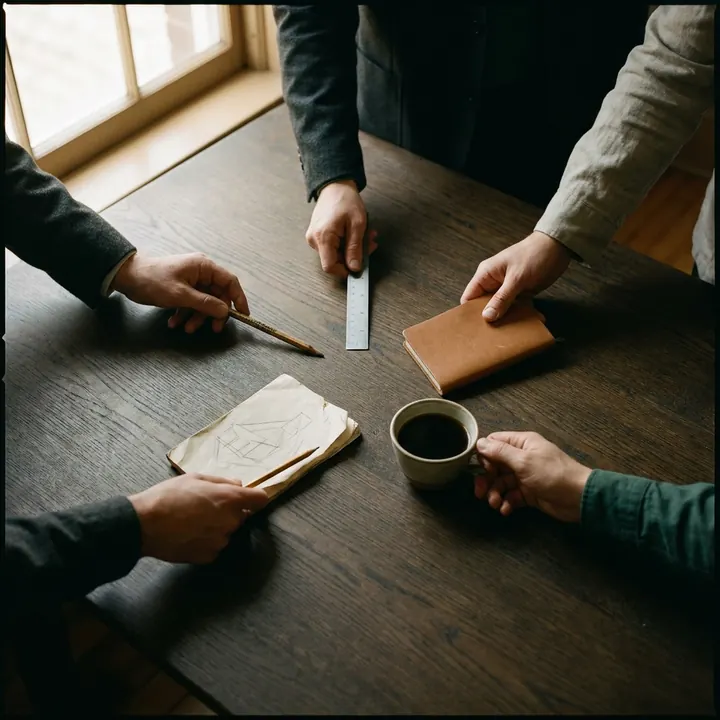
It is matched to a course
The challenge is tied to a concrete experience, a course in a given term, and to a team with a lead.
-

The team proposes the phases
The platform does not impose them. The team drafts the plan, the program approves it, and the commitment is set.
-

Each phase closes with evidence
A deliverable, an executive summary written for the company and, when the phase calls for it, the company's approval before moving on.
-

Assessment and certificate
The institutional rubric is applied criterion by criterion. The student leaves with a certificate of what they actually demonstrated.
The ledger is never edited. It only grows.
Every publication, approval, submission, assessment and visibility change writes a line. Lines are chained by fingerprint: altering one breaks every line after it, and the break is detectable.
At the close, the student receives a certificate with a verification code: what they demonstrated, not what they claimed. In the ledger, people appear under pseudonyms; their identity is kept apart, protected.
- Challenge publishedfingerprint —
- Visibility granted · L3fingerprint —
- Phase submittedfingerprint —
- Assessed with rubricfingerprint —
Illustrative example. Each fingerprint is computed in your browser with SHA-256 from the line and the previous fingerprint.

One platform, three doors.
What people usually ask.
Another question? Write to us at admin.trihelia@gmail.com.
What does a university need to get started?
A course or program where the challenges will run, someone to lead the program, and an agreement on how student data is handled. The pilot is set up with your rubrics, your academic terms and your email domains.
What does the company see of the students' work?
What was agreed, no more and no less. The level ranges from L0, overall progress only, to L6, each person's progress, which requires each student's authorization. It can change by phase, and every change is recorded.
How is student data protected?
Under Colombia's Law 1581 of 2012: prior and express authorization, a stated purpose and a record of every access. Identity documents are stored encrypted and the ledger uses pseudonyms.
What is asked of a company?
Writing the challenge, supporting the team with a mentor and approving each phase when asked. The program curates the challenge and coordinates the teams.
What does the student receive at the end?
A certificate with a verification code stating what they demonstrated, assessed with a rubric by their instructor, along with the evidence of their own work.
Where does government stand today?
The pilot starts with university and industry. Government is the third helix of the model and joins with our partners; when that happens, we will share it here.

Start with a pilot.
Tell us about your program and the challenges you want to work on. We will reply by email to agree on the scope.
Are you a company? Create an account to propose challenges.